Balance — Meditation app
Role: UX/UI Designer (User research, prototyping, usability testing)
Duration: 2 weeks
Team: 4 designers
Deliverables: High-fidelity mobile prototype
Tools: Figma, Slack, Zoom
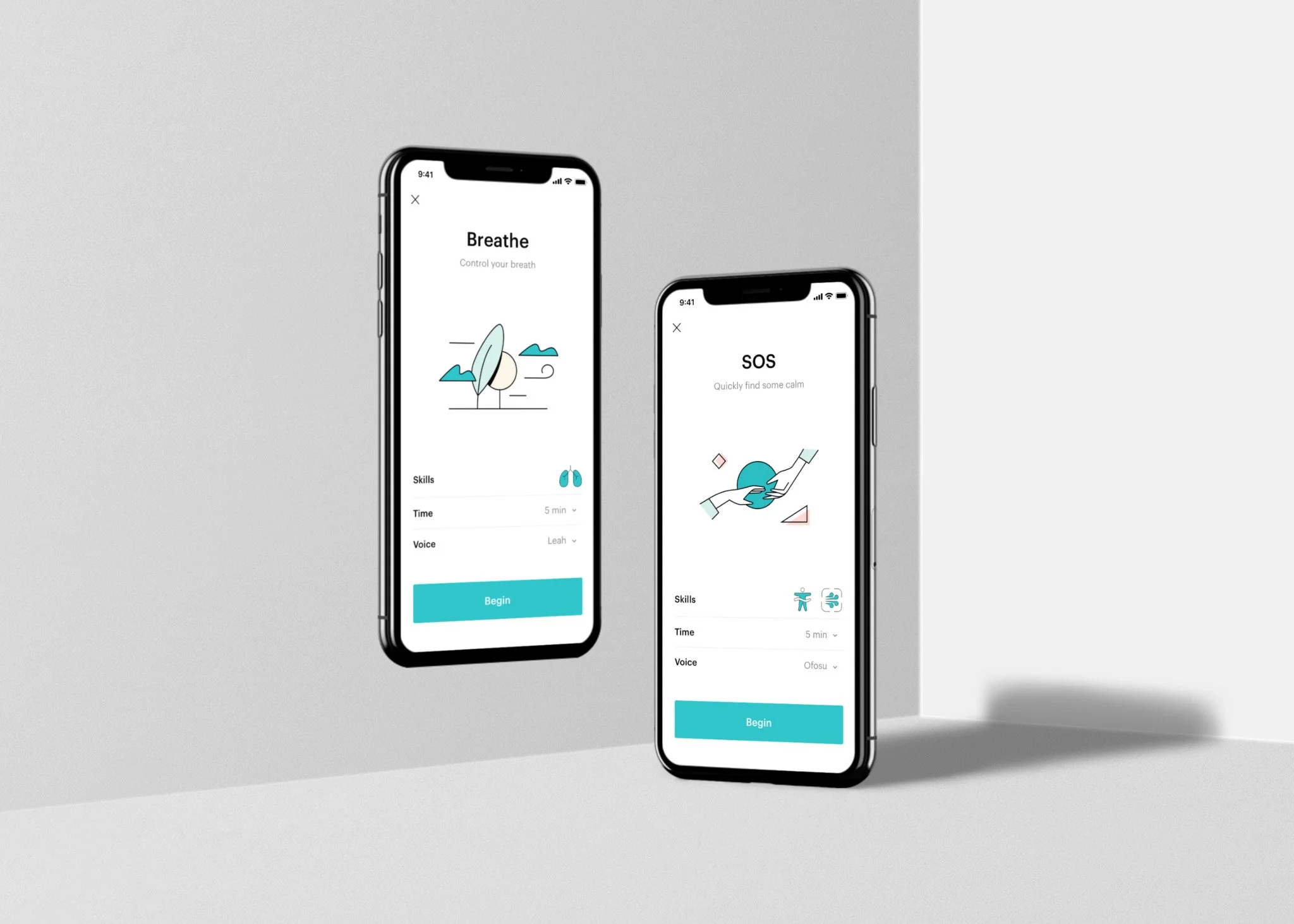
A conceptual UX project focused on improving consistency and self reflection for beginner meditators.
The Challenge
Beginner meditators often struggle with consistency, especially when progress feels invisible. Without simple ways to reflect on emotional change or track habits, users can lose motivation and abandon their practice.
The Solution
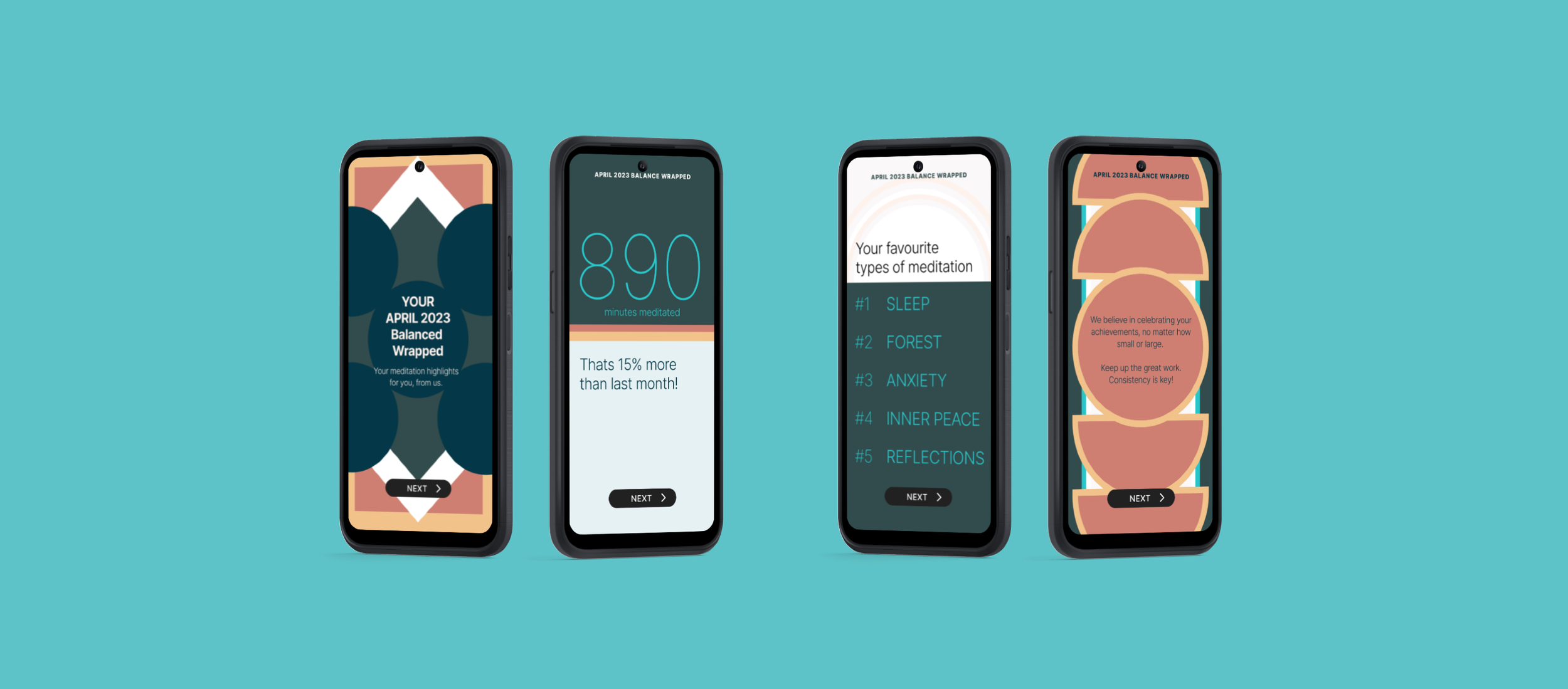
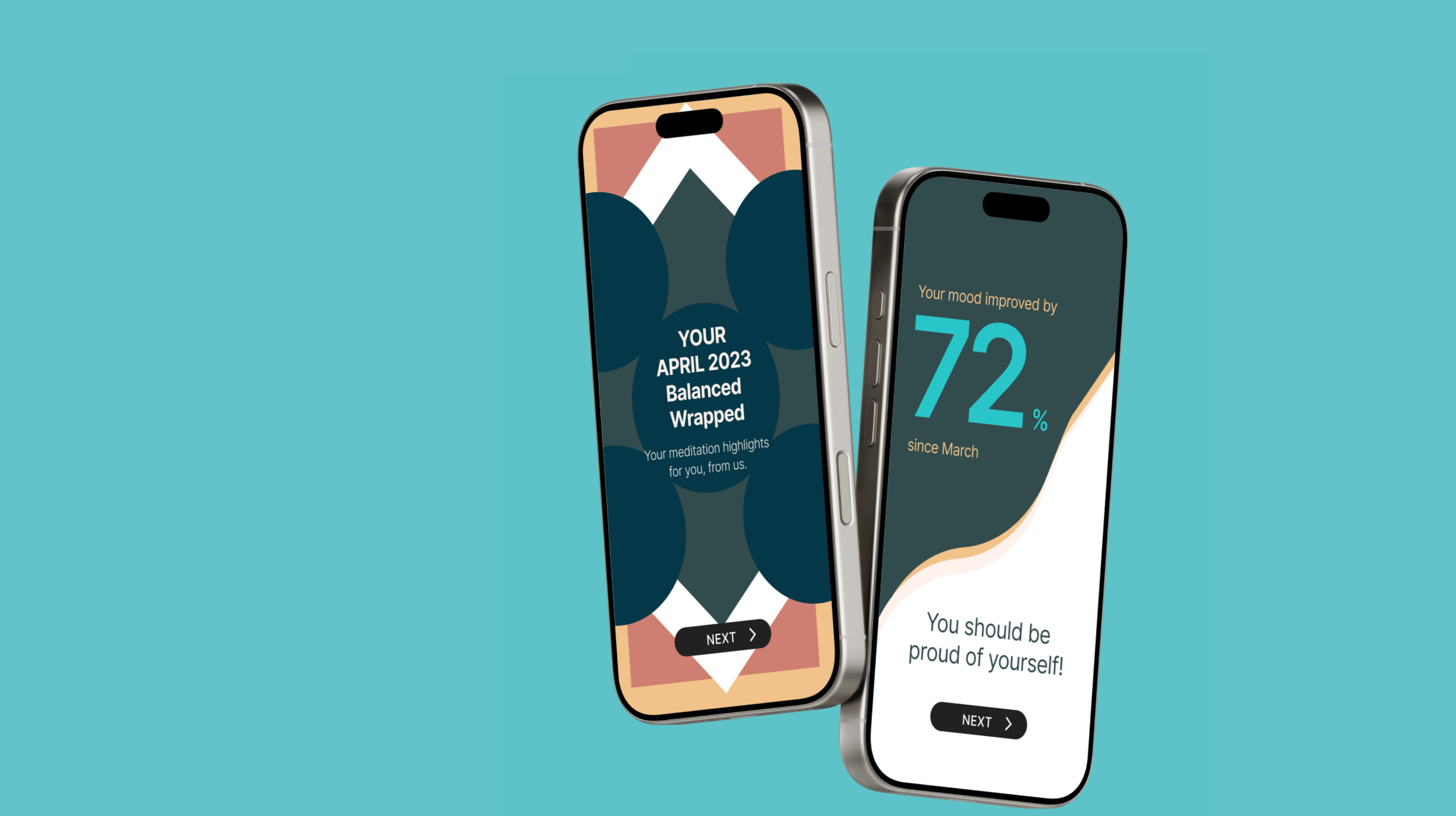
We introduced reflection and accountability features to help users better understand their emotional patterns and stay engaged with their meditation practice over time.
What I worked on
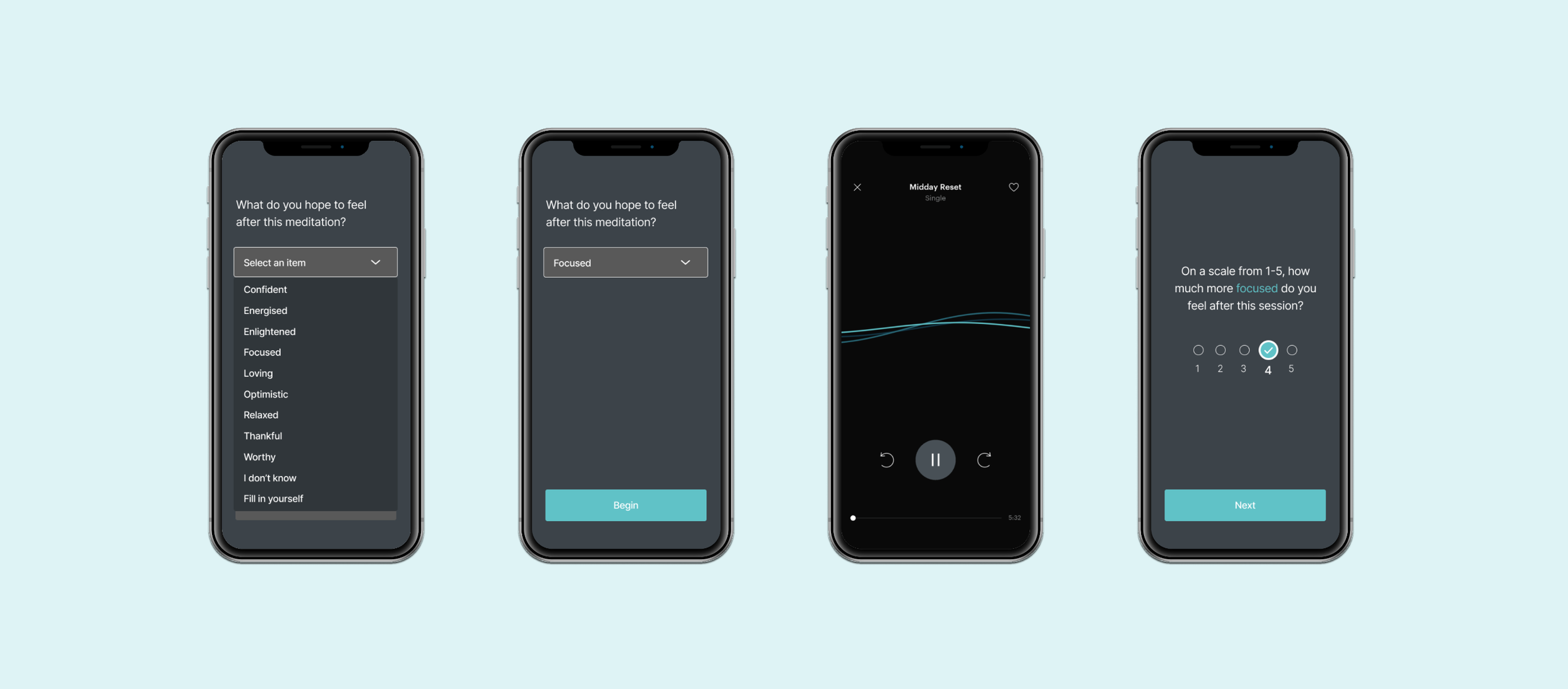
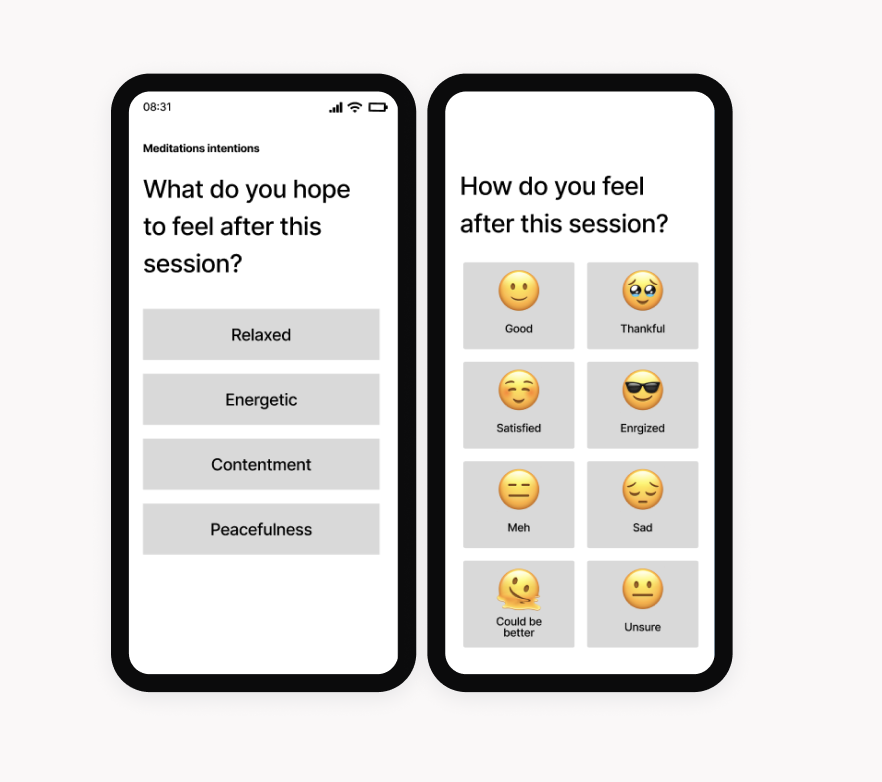
Mood tracker
Designed a quick pre session emotional check in to help users reflect on how they’re feeling before meditating.
Journaling prompts
Created guided post session reflections to support emotional awareness and long term habit building.
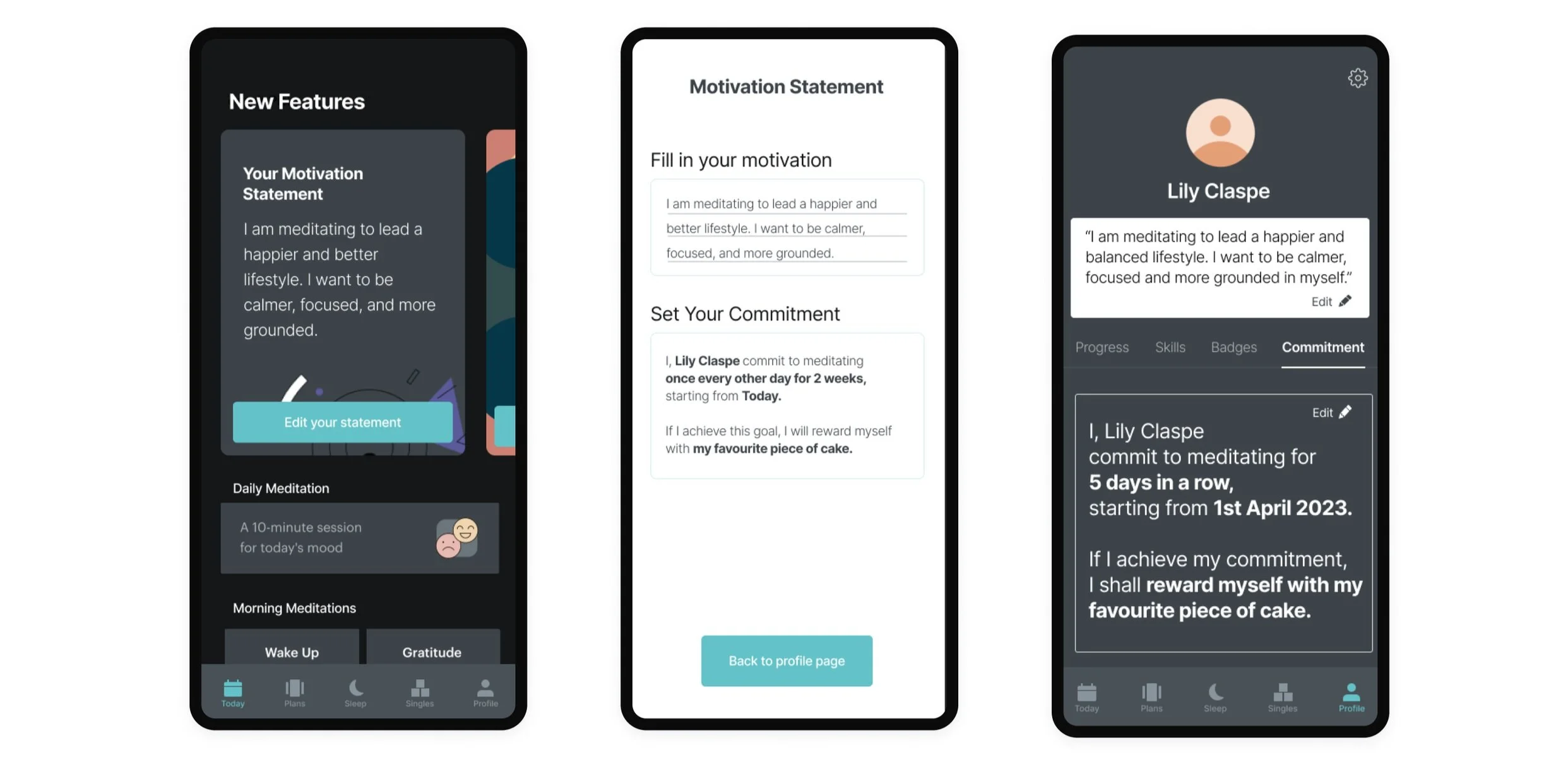
Personal contract
Introduced a commitment feature to encourage consistency and reinforce personal goals.
Reflection
Our user interviews revealed that meditators didn't just need more features they needed to feel progress. That insight drove every design decision, from the mood tracker to the personal contract feature. We focused on emotional visibility rather than functionality because that's what the research told us was missing.
Usability testing showed that all participants successfully completed the mood tracking flow, and the majority said the journaling prompts made them more likely to continue their practice. The personal contract feature resonated particularly strongly with users who had previously abandoned meditation apps they felt it gave them a sense of ownership over their habit.
This project taught me how much emotional context matters in design. Users don't just need functionality they need to feel understood. I also learned how important it is to test early and often some of our initial assumptions about how users would track progress were completely wrong once we put designs in front of real people. If I were to revisit this project I'd spend more time in the discovery phase exploring the psychology behind why people abandon wellness habits, to make our design decisions even sharper from the start.